| Fossil Ammonites & Goniatites
|
|
 |
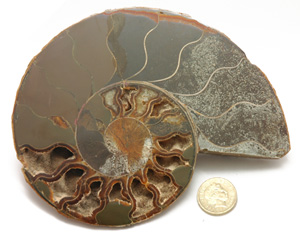
| Jurassic Fossil Ammonite. Sliced in half and inside face polished. Not Boxed. Polished fossil inside face showing helically-spiraled chambers. Approx 150 Million years old. Not Boxed.
Fossil Approx Size 16 x 13.5 x 2.5 cm
Comes with Free small folding plastic display stand.
Beautiful display fossil, you will not be disappointed.
Genuine Fossil.
Similar to image shown, but not identical as each is unique!

Reduced Was £49.99
Price: £48.50
SPECIAL OFFER - 5% Off Current Price
+ FREE Delivery UK Mainland*
Sorry Closed. Re-opening Soon
Ref: AmmSlice1
1 In Stock |
|
|
|
|
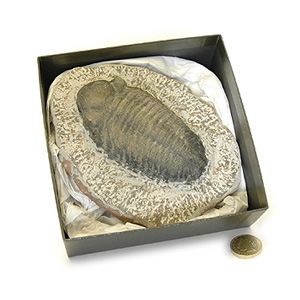
| Trilobite Fossil, Well preserved on Matrix. Boxed Trilobite beautifully prepared and exposed natural fossil structure.
Age at least 250 Million Years. From Morroco.
Approx size: 14.5 x 11 x 3 cm
Heavy specimen in hard matrix. Would make ideal gift.
Comes in box (box size 13.5 x 13.5 x 5cm)
Price: £80.00
SPECIAL OFFER - 5% Off Current Price
+ FREE Delivery UK Mainland*
Sorry Closed. Re-opening Soon
Ref: MBoxTrilo1
1 In Stock |
|
|
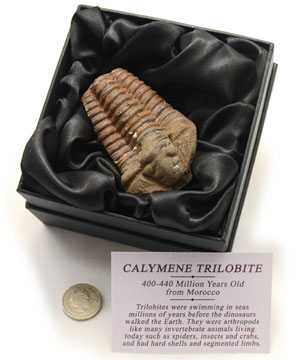
| Calymene Trilobite Fossil 400-440 Million Years Old. From Morocco. Presented in Small Black Gift Box Fossil Calymene Trilobite. Similar to item shown, but each are unique.
Presented in Small Black Gift Box
Trilobites were swimming in seas millions of years befor the dinosaurs walked the Earth.
400-440 Million Years Old. From Morocco.
Approx size: 7.5cm x 4.5cm x 2cm
Similar to image shown, each unique.
Please note: Low/Medium quality specimen: hence low price!
Comes in Black presentation box 11 x 11 x 7 cm
Reduced Was £38.99
Price: £20.00
SPECIAL OFFER - 5% Off Current Price
+ FREE Delivery UK Mainland*
Sorry Closed. Re-opening Soon
Ref: SBoxTrilo
2 In Stock |
|
|
| Fossil Amber with Insect Inclusions
|
|
|
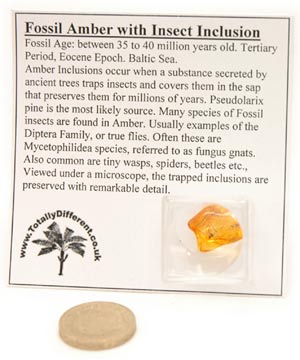
| Fossil Amber. Baltic Amber With SMALL INSECT Inclusion (Supplied in a 25mm square, Magnifying Box).
Fossil Amber With good Insect. Ideal gift. Great to add to any fossil collection.
May need more magnification to be seen properly
Amber Age: between 35 to 40 million years old. Tertiary Period, Eocene Epoch. Baltic Sea.
Amber Inclusions occur when a substance secreted by ancient trees traps insects and covers them in the sap that preserves them for millions of years
Supplied On Information Card.
Similar to image shown.
Every piece is unique and will vary slightly.
Small Insect Inclusion
Reduced Was £25.99
Price: £24.00
SPECIAL OFFER - 5% Off Current Price
+ FREE Delivery UK Mainland*
Sorry Closed. Re-opening Soon
Ref: AmberSmall
6 In Stock |
|
|
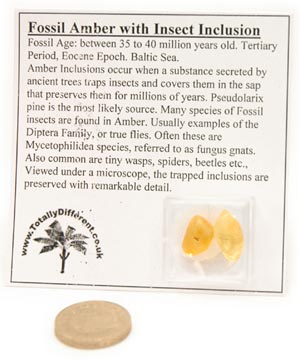
| Two Pieces of Fossil Amber. Baltic Amber - TINY INSECT Inclusions (Supplied in a 25mm square, Magnifying Box).
Fossil Amber With good Insect. Ideal gift. Great to add to any fossil collection.
May need more magnification to be seen properly
Fossil Amber Age: between 35 to 40 million years old. Tertiary Period, Eocene Epoch. Baltic Sea.
Amber Inclusions occur when a substance secreted by ancient trees traps insects and covers them in the sap that preserves them for millions of years
Supplied On Information Card.
Every piece is unique and will vary slightly.
Tiny Insect Inclusion
Price: £27.00
SPECIAL OFFER - 5% Off Current Price
+ FREE Delivery UK Mainland*
Sorry Closed. Re-opening Soon
Ref: Amber2Small
3 In Stock |
|
|
|
|
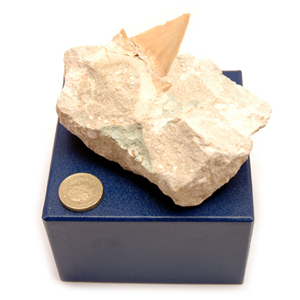
| Shark Tooth Fossil In Matrix, Presented in Gift Box. Fossil Shark Tooth. From Morocco.
These Fossil sharks were predominantly of the geologically 'recent' Caenozoic era (1 to 2 million years old!)
Approx Tooth size: 6cm x 4cm x 1cm
Approx Matrix size: 10cm x 6cm x 6cm
Comes in Blue presentation box 11 x 7 x 7 cm
|
Reduced Was £38
Price: £35.00
SPECIAL OFFER - 5% Off Current Price
+ FREE Delivery UK Mainland*
Sorry Closed. Re-opening Soon
Ref: BoxSharkTooth1
1 In Stock | |
|
|
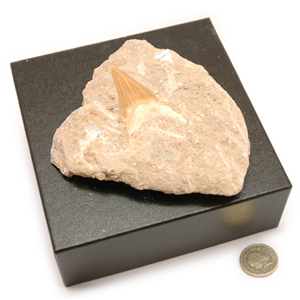
| Shark Tooth Fossil In Matrix, Presented in Black Gift Box. Fossil Shark Tooth. From Morocco.
These Fossil sharks were predominantly of the geologically 'recent' Caenozoic era (1 to 2 million years old!)
Approx Tooth size: 5cm x 3.5cm
Approx Matrix size: 10cm x 11cm x 2cm
Comes in Black presentation box 14 x 14 x 6 cm
Price: £37.00
SPECIAL OFFER - 5% Off Current Price
+ FREE Delivery UK Mainland*
Sorry Closed. Re-opening Soon
Ref: MBoxST2
1 In Stock |
|
|
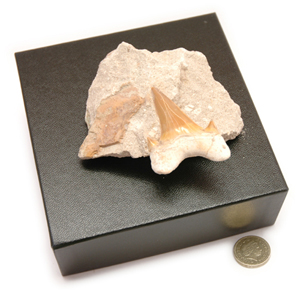
| Shark Tooth Fossil In Matrix, Presented in Black Gift Box. Fossil Shark Tooth. From Morocco.
These Fossil sharks were predominantly of the geologically 'recent' Caenozoic era (1 to 2 million years old!)
Approx Tooth size: 5.5cm x 4cm x 1cm
Approx Matrix size: 10cm x 8cm x 3cm
Comes in Black presentation box 14 x 14 x 6 cm
Price: £38.00
SPECIAL OFFER - 5% Off Current Price
+ FREE Delivery UK Mainland*
Sorry Closed. Re-opening Soon
Ref: MBoxST1
1 In Stock |
|
|
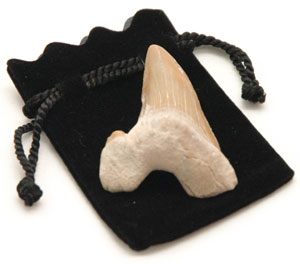
| Fossil Shark Tooth. (Size: Average 4 to 5 cm) Genuine Fossil SHARK'S TOOTH FOSSIL 'Lamna Caraibaea' (Morocco)
Presented in Black Drawstring Pouch.
Fossil Sharks Tooth similar to item shown. Each unique and genuine fossil sharks tooth.
Medium Sized Shark's Fossil Tooth. These sharks were predominantly of the geologically 'recent' Caenozoic era (1 to 2 million years old!).
New Stock : Similar to image shown. Every piece is unique and will vary slightly and may be darker in colour.
All Sharks Teeth are unique and genuine fossils.
Not Recommended for children under 12 years.
Reduced Was £24.99
Price: £11.99
SPECIAL OFFER - 5% Off Current Price
+ FREE Delivery UK Mainland*
Sorry Closed. Re-opening Soon
Ref: ST-29-895
4 In Stock |
|
|
|
|
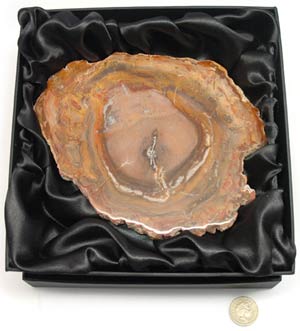
| Fossil Wood Thin Slice - 16.5 x 14 x 1cm. Boxed.Presented in Large Black Gift Box
The study of fossil wood is called "palaeoxylology".
Approx Size Of Fossil: 16.5 x 13.5 x 1 cm
Over time the wood will usually be the part of a plant that is best preserved.
Presented in Black Gift Box 18 x 18 x 8 cm
Genuine Fossil.
Reduced Was £48.99
Price: £38.00
SPECIAL OFFER - 5% Off Current Price
+ FREE Delivery UK Mainland*
Sorry Closed. Re-opening Soon
Ref: LBoxWood
1 In Stock |
|
|
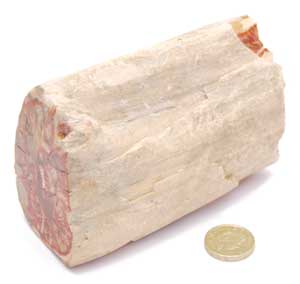
| Chunky Branch Specimen Of Fossil / Petrified Wood. BoxedSize Of Fossil : 11.5 x 8 x 5 cm
Comes in black gift box.
Over time the wood will usually be the part of a plant that is best preserved. The study of fossil wood is called "palaeoxylology".
Cretaceous Age. Approx 65 Million Years Old
From Madagascar.
Genuine Fossil.
Reduced ( Was £44.99 )
Price: £40.00
SPECIAL OFFER - 5% Off Current Price
+ FREE Delivery UK Mainland*
Sorry Closed. Re-opening Soon
Ref: MBoxWood
1 In Stock |
|
|
|
|
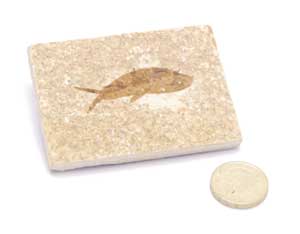
| Knightia Fossil Fish Showing fine detail of fins and backbone Fossil Fish specimen of 'Knightia' (Herring)
Eocene period. 55-34 Million Years ago! Well preserved, prepared, specimen in cleaved fine grain sandstone matrix.
Wyoming. USA.
Approx Fish Size: 5 x 1 cm
Approx Matrix Size: 7.5 x 5 x 0.6 cm
|
Reduced Was £37.50
Price: £29.00
SPECIAL OFFER - 5% Off Current Price
+ FREE Delivery UK Mainland*
Sorry Closed. Re-opening Soon
Ref: Fossil-Fish
1 In Stock |
|
|
|
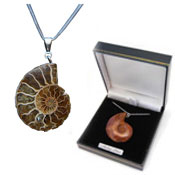 | A Stunning Range of Fossil Jewellery
Click Here
A Timeless Collection of Fossil Jewellery
Handmade by English Craftsman from UK
|
|
|
|
|
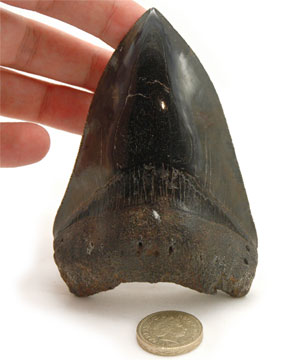
| SOLD Charchorocles Megalodon Shark Fossil Tooth. Sth Carolina, USA. Stunning Display Specimen. Genuine Fossil The Megalodon, was a Miocene giant prehistoric shark that lived between about 16 to 1.6 million years ago.
It is considered to be the largest predatory fish to have ever lived. The best-educated estimates of this creature's maximum size range from 12 to 20 m (40 to 66 ft) Charchorocles Megalodon also known as Carcharodon Megalodon.
Megalodon Tooth from root to tip approx 10cm
Comes In Colourful Drawstring Bag
Not Recommended for children under 12 years. SOLD
Price: £175.99
Sold Out
Sorry Closed. Re-opening Soon
Ref: 2Megalodon
|
|
|
|
|
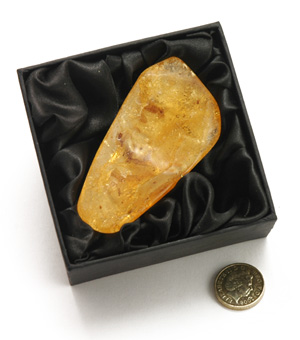
| SOLD Fossil Amber Polished Specimen. Multiple Insect Inclusions. Multiple insect inclusions : At least eight unidentified insects which can be found using a magnifying glass. Beautiful piece of natural fossil amber.
Fossil Amber with insect inclusions - Amber for sale is as seen in image.
Irregular Sized Amber Approx 8 x 4.5 x 1.3 cm
Beautiful piece of fossil amber. Naturally rough in places - polished.
For larger photos of close ups - please view larger image
More online soon |
Sale - £50 off ( Was £149.99 )
Price: £99.99
Sold Out
Sorry Closed. Re-opening Soon
Ref: BoxAmber08
| |
|
|
|
|
Fossils : General Information
Fossils are the mineralised traces of pre-historic animals and plants. The study of fossils and the evolutionary fossil record across geological time is called palaeontology.
Fosils are the remains of organisms or traces or organism which existed thousands of years ago, in many cases fossils are millions of years old.
The harder parts of pre-historic animals are the most usual part to survive as fossils. Usually hard shells, teeth or bones make the best fosils. Even for these harder parts to fossilise the conditions for fossilisation must have been favourable. Fossilisation of soft body parts is extremely rare!
Most easily accessible fossils come from the Quaternary, Tertiary, Cretaceous, Jurassic and Triassic, Geological Time Periods.
Click Here - Geological / Fossil Timeline
|
|